We route epoxy flooring requests in the Denver area to local crews. Ask for itemised written quotes so preparation method, film thickness and warranty can be compared side by side.
Water and refill in Lakewood
Denver Water supplies 1.5 million people in Denver and its suburbs from mountain snowmelt, and it describes that water as moderately hard. It publishes water quality by treatment plant and system, not by street, so a hardness reading quoted for one part of the metro is not a reading for your slab.
Utility accounts: Denver Water · 303-893-2444
Utility: Denver Water — 303-893-2444
Soil, drainage and the shell
Denver series soils are slow to drain: fine, smectitic clays formed from calcareous sedimentary rock, with saturated hydraulic conductivity low enough that water reaching a slab stays in the profile. Smectite means the clay swells when wet and shrinks when dry, so slabs on it move with the seasons.
The local pool stock
Lakewood sits west of Denver against Green Mountain and Dakota Ridge, on ground that climbs in benches as it reaches the foothills. A large share of the housing stock is 1950s to 1970s, with slabs that were poured thin and often without a vapour barrier.
What to check in this town
- {'h2': 'Who permits epoxy flooring work in Lakewood', 'html': '
The City of Lakewood issues its own permits through Lakewood Planning and Building. Jefferson County uses a 36-inch frost depth, the same figure Denver uses.
Permit pages: www.lakewood.org.
'} - {'h2': 'Cracks, patch gel and prep on older shop slabs', 'html': '
Shallow Flex-series soils over weathered volcanic bedrock (USDA-NRCS Denver series) mean movement shows up as cracking in older slabs, which is normal here and not automatically a reason to walk away. The published tools for that are mechanical - an EC-72 epoxy patch gel for filling, a diamond grinder such as the Husqvarna PG 830 or a shot blaster such as the Sase Bull 1250 to open the surface, and a HEPA unit like the DiamaPro SVX3-A to control the dust - plus the ICRI CSP 3-4 profile any coating needs to bond. We do not install or inspect; we match your request to providers who work this ground.
'} - {'h2': 'Frost depth and the cold half of the year', 'html': '
Denver-area frost depth runs 36 inches, and Lakewood sits higher in the hills than the valley floor, so winter is longer and colder up here. NWS Denver/Boulder records for the valley show January mean lows near 25 °F, with a record low of −16 °F on 7 Feb 1989 (weather.gov NWS Denver/Boulder climate). Practically, that means ice-melt residue on shop floors for months and a summer that follows with hard UV - and a new pour that needs its full 28 days of hydration before anything is coated.
'}
Jobs we can route here
- Garage Epoxy Flooring
- Basement Epoxy Flooring
- Commercial Epoxy Flooring
- Metallic Epoxy Flooring
- Polyaspartic Coatings
- Concrete Coating & Sealing
Costs in Lakewood
| Job | Published range |
|---|---|
| Flake system, per sq ft | $4 - $9 |
| Polyaspartic, per sq ft | $6 - $9 |
| Two-car garage, installed | $1,800 - $5,500 |
| Professional install, full range | $4.00 - $15.00 per sq ft |
| Retail DIY kit | $60 - $160 |
Epoxy Flooring services in Lakewood
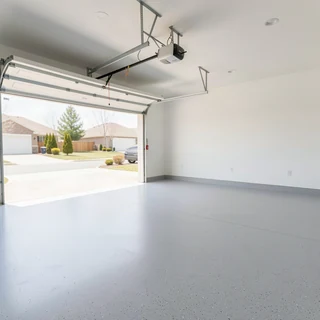
Garage Epoxy
Garage Epoxy Flooring in Lakewood, CO - local costs and what the job includes.
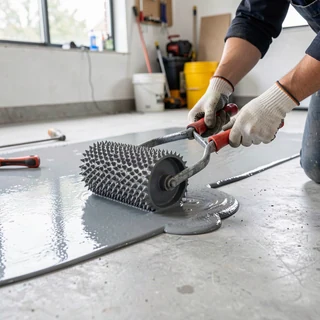
Basement Epoxy
Basement Epoxy Flooring in Lakewood, CO - local costs and what the job includes.
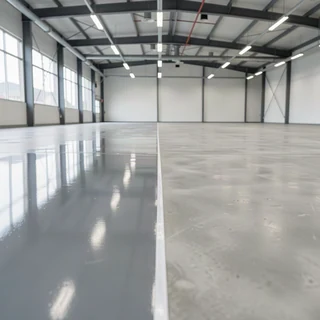
Commercial Epoxy
Commercial Epoxy Flooring in Lakewood, CO - local costs and what the job includes.