We route epoxy flooring requests in the Denver area to local crews. Ask for itemised written quotes so preparation method, film thickness and warranty can be compared side by side.
Water and refill in Denver
Denver Water supplies 1.5 million people in Denver and its suburbs from mountain snowmelt, and it describes that water as moderately hard. It publishes water quality by treatment plant and system, not by street, so a hardness reading quoted for one part of the metro is not a reading for your slab.
Utility accounts: Denver Water · 303-893-2444
Utility: Denver Water — 303-893-2444
Soil, drainage and the shell
Denver series soils are slow to drain: fine, smectitic clays formed from calcareous sedimentary rock, with saturated hydraulic conductivity low enough that water reaching a slab stays in the profile. Smectite means the clay swells when wet and shrinks when dry, so slabs on it move with the seasons.
The local pool stock
Denver sits at 5,280 ft on the South Platte River at the western edge of the high plains. The ground under the older neighbourhoods is Denver-series clay, and the slab stock splits the way the city does: pre-war garages on thin, hand-finished slabs downtown and around Cherry Creek, and 1960s to 1990s four-inch pours across the post-war subdivisions.
What to check in this town
- {'h2': 'Who permits epoxy flooring work in Denver', 'html': '
Denver Community Planning & Development permits the City and County of Denver under the Denver Residential Code 2025, which is the 2024 IRC with local amendments. A coating over an existing slab is a finish; structural, drainage, electrical or egress work is permitted work.
Permit pages: www.denvergov.org.
'} - {'h2': 'High-desert floors: ice-melt in winter, UV and heat in summer', 'html': '
NWS Denver/Boulder records for the Denver International Airport area: mean highs of about 45 °F in January rising to about 90 °F in July, mean lows of about 25 °F in January to about 56 °F in July, an all-time record of 108 °F on 16 July 2023 and a record low of −16 °F on 7 Feb 1989, with July relative humidity averaging around 30% (weather.gov NWS Denver/Boulder climate). In practice that means two opposite stresses on the same slab: months of snow and ice-melt chemicals tracked in on boots and tyres, then an intense-UV summer where a dark slab can be too hot to stand on. Hot-tire and white-spotting complaints track the summer half of that, and very low humidity with a big daily temperature swing is why cracks reopen on older pours.
'} - {'h2': 'Frost depth, moisture and the numbers that actually gate a coat', 'html': '
Denver frost depth runs roughly 36 inches, which is why footings here reach below it. For coating work the measurable gates are different ones: a standard Westcoat system wants the slab below 5 lbs/1000 sq ft on ASTM F1869 or 75% RH on ASTM F2170, a surface profile of ICRI CSP 3-4, and a new slab should have had its full 28 days of hydration. Denver series soils are slow to drain: fine, smectitic clays formed from calcareous sedimentary rock, with saturated hydraulic conductivity low enough that water reaching a slab stays in the profile. We are a matching service, not a contractor - we do not test, install or guarantee, we route your request to local providers who put those numbers on paper first.
'}
Jobs we can route here
- Garage Epoxy Flooring
- Basement Epoxy Flooring
- Commercial Epoxy Flooring
- Metallic Epoxy Flooring
- Polyaspartic Coatings
- Concrete Coating & Sealing
Costs in Denver
| Job | Published range |
|---|---|
| Flake system, per sq ft | $4 - $9 |
| Polyaspartic, per sq ft | $6 - $9 |
| Two-car garage, installed | $1,800 - $5,500 |
| Professional install, full range | $4.00 - $15.00 per sq ft |
| Retail DIY kit | $60 - $160 |
Epoxy Flooring services in Denver
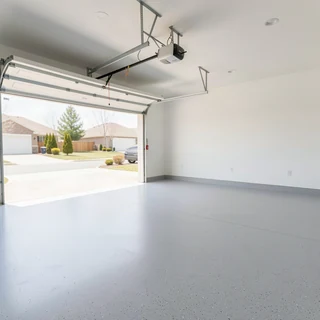
Garage Epoxy
Garage Epoxy Flooring in Denver, CO - local costs and what the job includes.
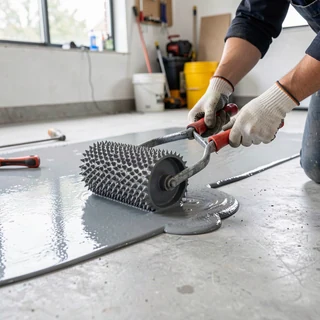
Basement Epoxy
Basement Epoxy Flooring in Denver, CO - local costs and what the job includes.
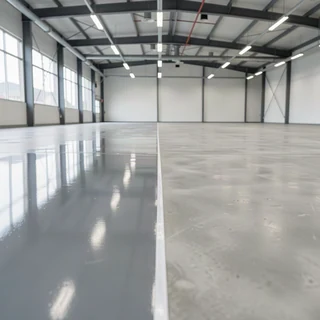
Commercial Epoxy
Commercial Epoxy Flooring in Denver, CO - local costs and what the job includes.