Not every slab needs a full broadcast coating. A sealer is a maintenance layer measured in single mils, a stain changes colour without building film, and a resinous system replaces the surface altogether. What decides which one is right is the same in every Denver garage, basement and shop: how the slab will be used, and what the moisture tests say. Published bands run $4-9 per square foot for a flake system, $6-9 for polyaspartic, $8-$15 for metallic, and $4.00 to $15.00 per square foot across professional installs. We are a free matching service, not a contractor.
Sealer, stain or a full system: what each one does
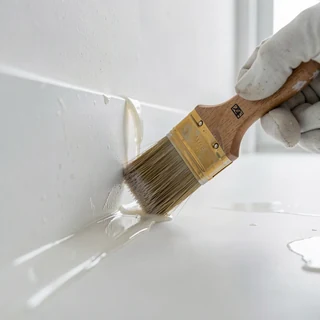
The three options are different products with different jobs, and comparing them on price alone is how homeowners end up disappointed.
| Option | What it is | What it does not do |
|---|---|---|
| Penetrating sealer | Liquid that soaks into the surface and reacts within the pores | Builds no film; does not fill pitting or bridge cracks |
| Film-forming sealer | A thin coating on top of the slab | Measured in single mils; wears through with traffic and can blush under moisture |
| Stain or dye | Colour delivered into the surface | Adds no protection; needs a sealer on top |
| Resinous coating system | A multi-layer build that becomes the floor surface | Needs mechanical prep and, if the slab reads high, a vapor barrier |
A penetrating sealer suits a slab that stays dry and gets light, foot-traffic use. A resinous system is the answer where there is vehicle traffic, chemical exposure, a hot-tire problem, or a moisture reading that needs holding back. Ask which category is being quoted, because a sealer priced like a coating is the most common mismatch in this niche.
Test the slab before deciding anything
Sealing a slab that is still driving moisture traps the vapor under whatever goes on top, and the failure shows up a season later as blisters, then curled edges, then sheets of film coming off concrete that still looks fine underneath. Two tests settle it, and both should appear in writing before work is priced.
| Requirement | Standard | Threshold | Action if failed |
|---|---|---|---|
| Vapor emission | ASTM F1869 | Below 5 lbs per 1,000 sq ft | Specify a moisture vapor barrier |
| In-situ relative humidity | ASTM F2170 | Below 75% RH | Specify a moisture vapor barrier |
| Cure cycle on new concrete | Placement record | 28 days minimum hydration | Wait before coating |
| Compressive strength | Substrate requirement | 2,500 psi minimum | Remediate the slab first |
Above either moisture limit, a dedicated barrier such as EC-15 goes in under the base coat and the build grows by that layer. Below the compressive limit, the honest answer is that a resinous floor is the wrong product until the slab is dealt with. Ask for the readings themselves - pounds for F1869 and percent relative humidity for F2170 - and for where on the slab they were taken.
Denver ground and weather: what the slab is asked to handle
Local soils explain why moisture testing is not a formality here. Denver series soils are slow to drain: fine, smectitic clays formed from calcareous sedimentary rock, with saturated hydraulic conductivity low enough that water reaching a slab stays in the profile. Frost depth in this high-plains climate runs 36 inches, so exterior flatwork, aprons and footings all sit above a real freeze-thaw cycle.
The weather side of the spec is just as specific. NWS normals for Denver International Airport run from a mean high of 44 F in January to 89 F in July. Intense UV and summer surface heat push outgassing and fade unprotected surfaces, while winter brings snow and ice-melt chemicals onto the slab on every tire.
Water quality varies across the valley as well. Denver Water supplies 1.5 million people in Denver and its suburbs from mountain snowmelt, and it describes that water as moderately hard.
Matching the system to the space
Once the slab passes, the choice is about exposure. The published bands give a starting point, and the specification gives the rest.
| Space | Typical specification | Published band |
|---|---|---|
| Residential garage | Decorative flake broadcast with a UV-stable topcoat | $4-9 per sq ft |
| Garage or shop needing fast turnaround | Polyaspartic system, foot traffic in as little as 24 hours | $6-9 per sq ft |
| Basement or utility zone | Moisture-tested build with a vapor barrier if the readings call for it | Within the $5.00-$15.00 professional range |
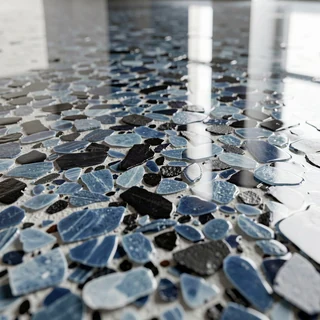
| Showroom, gym or feature floor | Metallic epoxy with a UV-stable clear topcoat | $8-$15 per sq ft |
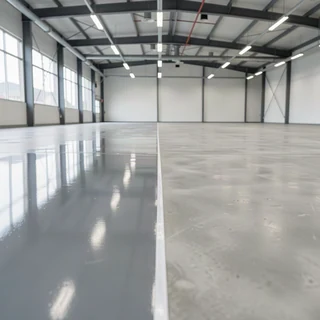
| Commercial or industrial | Heavy-duty build; novolac topcoat such as EC-50 for continuous chemical exposure | Within the $5.00-$15.00 professional range |
Two-car garages typically land between $1,800 and $5,500 installed. Thickness is what the money buys: professional double-broadcast builds finish at 20-35 mils dry film thickness with a 12-15+ year expectation, while a retail kit at $60-$160 produces 2-5 mils and fails inside about 24 months. Across twelve years the DIY path costs $720 to $1,920 in materials, against $0 in repair cost on a professional floor over the same period.
Application and cure: what happens on the day
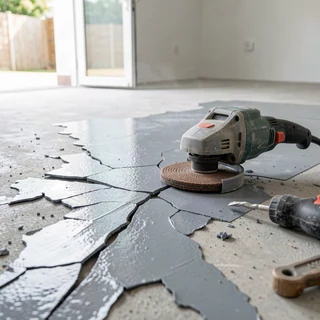
Preparation is the slowest part and the part no schedule can compress: shot blasting or diamond grinding to an ICRI CSP 3-4 profile, hand grinding at edges and around post bases, crack and joint routing filled with a flexible material such as EC-72 Epoxy Patch Gel, and HEPA extraction running at the tool because grinding and blasting release crystalline silica. Then the layers go down - a penetrating primer such as EC-12, a base coat with the first aggregate broadcast, a binder with the second, and the topcoat. Aggregate applied to refusal, then scraped back, is what produces a dense wear matrix rather than a light sprinkle near the surface.
Curing follows the chemistry. A fast-cure polyaspartic system allows foot traffic in as little as 24 hours. A slower build phases at 0-48 hours with no pedestrian traffic, a minimum of 72 hours before vehicle traffic, and five days to full cure. Professional systems are formulated for a wide application window, from -30 F to 140 F, so a Denver winter does not automatically block a project the way a waterborne kit would.
Permits and the questions to ask before you sign
Sealing a slab is a finish and normally needs no permit. Anything that changes structure, drainage, electrical or egress does, and the jurisdiction follows the address rather than the city name: the City of Denver Building and Safety division covers incorporated city limits, while parts of the valley with Denver or Aurora mailing addresses are in unincorporated Denver County and are permitted there. Denver Community Planning & Development permits the City and County of Denver under the Denver Residential Code 2025, and each suburb - Aurora, Lakewood, Arvada, Thornton, Westminster and Douglas County - runs its own building department, so the jurisdiction follows the address.
Frequently asked questions
Is sealing cheaper than installing an epoxy floor?
They are different products and are not quoted the same way, which is why a sealer priced like a coating is a warning sign. Published bands for resinous systems are $4 to $6 per square foot for a single-colour system, $6-9 for polyaspartic and $8-$15 for metallic, with professional installs generally $4.00 to $15.00. Ask which category is being quoted before comparing numbers.
Does a concrete sealer stop moisture coming through the slab?
Only a designated vapor-block system does. A penetrating or film-forming sealer will not hold back vapor pressure, and sealing over a slab that reads above 5 lbs per 1,000 sq ft on ASTM F1869 or above 75% RH on ASTM F2170 traps moisture under the film. In that case the specification needs a dedicated moisture vapor barrier such as EC-15 under the base coat.
How long does a concrete coating or sealer last?
A sealer is a maintenance layer and is expected to be reapplied. A professional double-broadcast resinous build finishes at 20-35 mils dry film thickness and is expected to run 12-15+ years before a topcoat rejuvenation is even considered, with sweeping and mopping as the maintenance programme. A retail kit at 2-5 mils typically fails inside 24 months.
Does coating a slab in Denver need a permit?
A coating or sealer over an existing slab is normally a finish and needs no permit. Denver Community Planning & Development permits the City and County of Denver under the Denver Residential Code 2025, and each suburb - Aurora, Lakewood, Arvada, Thornton, Westminster and Douglas County - runs its own building department, so the jurisdiction follows the address. Confirm the scope in writing before work starts.
Related
Sources
- Denver series soils are slow to drain: fine, smectitic clays formed from calcareous sedimentary rock, with saturated hydraulic conductivity low enough that water reaching a slab stays in the profile.
- Denver Water supplies 1.5 million people in Denver and its suburbs from mountain snowmelt, and it describes that water as moderately hard.
- ASTM F2170 - Standard Test Method for Determining Relative Humidity in Concrete Floor Slabs Using in situ Probes
- City of Denver - Building, Planning and Engineering Division, Community Development Department